There are so many arbitrary decisions that are made in life that we all accept without any real question. If you went to a pub and ordered a pint when you were seventeen-years and three-hundred-and-sixty-four days old then you would be breaking the law. Do the same thing the following day and you won’t be. Why is it that an eighteen-year-old can be trusted to drink alcohol and not be daft with it but a seventeen-year-old can’t be? Add to that the fact that the law in the UK dictates that it’s OK for an adult to buy beer, cider or wine for someone over sixteen if they’re having a meal at a table in a licensed restaurant and you can see that the whole thing becomes even more complicated. That’s to say nothing of the fact that a child aged five to sixteen can drink alcohol at a private premises such as home without breaking any law. The fact that the United States of America says that people must be over the age of twenty-one to drink alcohol merely serves to confirm the idea of the age selection being arbitrary.

Regardless of the arbitrary nature of the cut off point for the legality of drinking, we all accept it because it is the law. The same thing can be true for the age at which we’re allowed to have sex, drive and, of course, gamble. Just as with alcohol intake, however, there are a host of various different rules and regulations around the age limit for gambling that muddy the waters somewhat. The age you need to be to gamble in a casino or place a bet at a bookmaker’s is different to the age you need to be to buy a lottery ticket, for example. So how were the rules decided on that front? Why is one form of gambling seen as less problematic than another? Should it not be a blanket decision regarding an acceptable age for gambling, regardless of the event that you’re gambling on? That’s not to say that the age should be lowered to sixteen across the board, of course; perhaps some feel that it should be raised to twenty-one. In this piece we’ll explore the various rules, how they came about and what might happen to them in the future.
Young people's awareness of the timing and placement of gambling advertising on traditional and social media platforms: a study of 11-16-year-olds in Australia Harm Reduct J. 2018 Oct 19;15(1):51. Doi: 10.1186/s12954-018-0254-6.
Best affordable gaming console for kids Sony PlayStation 3. The PlayStation 3 is a home video game console developed by Sony Computer Entertainment. It was the very first gaming console of its type to integrate gaming with social media. Sony’s first-ever social gaming service, The PlayStation Network, was introduced with the PlayStation 3. Lady Gaga's mama shares sites to empower teens to find help and community. The Best Kids' Apps of the Decade (2010–2019) The 10 most game-changing apps from the past 10 years.
New Age Verification Laws Come Into Place In 2019
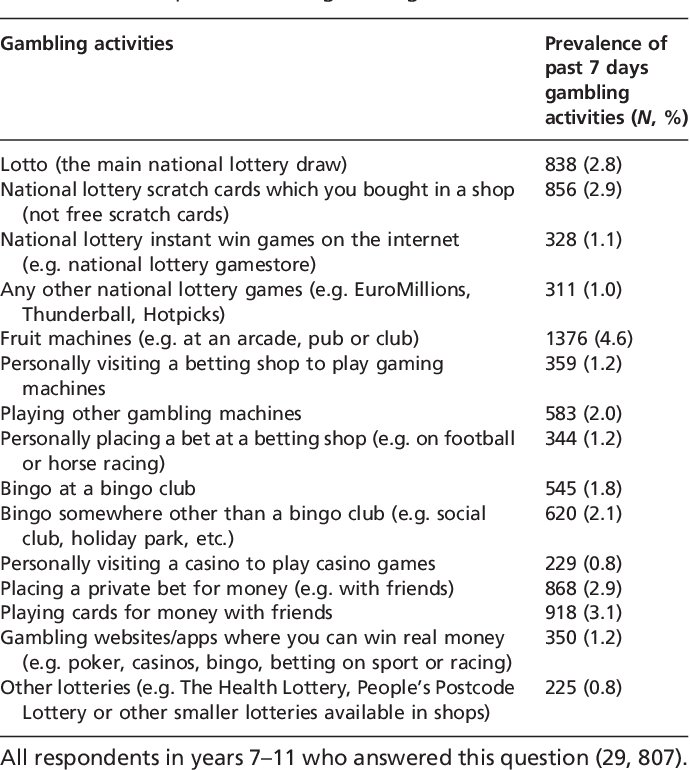
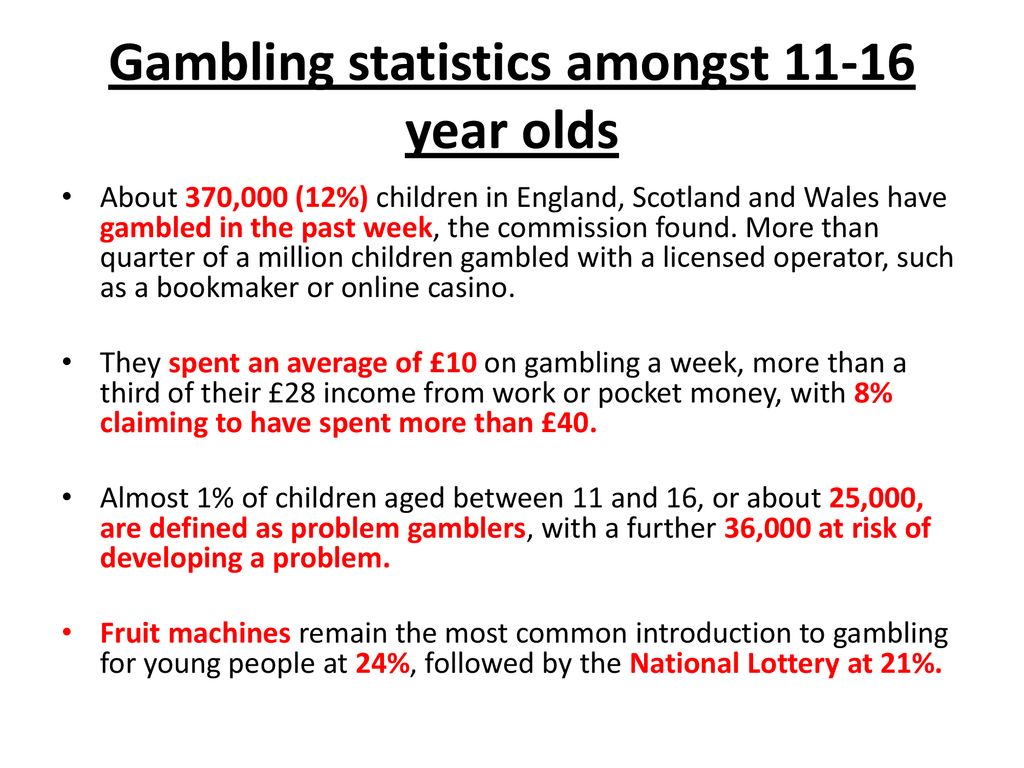
Oct 15, 2019 Two-fifths of 11- to 16-year-olds have gambled in the past year, research suggests. Playing fruit machines was the most popular form of gambling, followed by playing cards for money with friends. With the help of online sportsbooks that cater to 18-year-olds, betting on thanksgiving games has never been easier and more convenient than right now. New accounts can take advantage of numerous bonus options, and the sites listed in our guide typically offer additional platforms, including online casinos, racebooks, and poker gambling.
Following a review of age verification procedures for UK licenced gambling business the Gambling Commission announced in 2019 that companies that offer gambling to UK citizens must now verify the age of any customer before they make a deposit or bet.
Previously brands were allowed to let people sign up, deposit and bet as long as they verified age within 72 hours or before a withdrawal was made. The commission argue however that this still potentially allows minors to gamble, even if they ultimately may not be able to withdraw.
The effects of this mean there will likely be longer delays between signing up and betting, however it will mean children are less able to bet online. The rules also extend to demo and free-to-play games online, such as slots. While this is not technically gambling as no prizes are provided the GC argue rightly that kids should not be able to play these games as they are a clear gateway to gambling proper.
What Are The Current UK Laws?

| Gambling Type | Age Limit |
|---|---|
| Casino Or Licensed Premises | 18 |
| Gaming Machines From Categories A, B1, B2, B3, B3A, B4 and C | 18 |
| Gaming machines From Category D | No Age Limit |
| National Lottery | 18 |
| Scratchcards | 18 |
| Football Pools | 18 |
| Private Or Non-Commercial Betting | No Age Limit |
| Equal Chance Gaming | No Age Limit |
| Prize Gaming At Entertainment Centre Or Travelling Fair | No Age Limit |
If we’re going to have a look at the age restrictions that are in place over gambling then it makes sense to first explore things as they currently are. In the United Kingdom there are several different age limits depending on what exactly it is that people are gambling on, as the table above demonstrates.
You can see from the table that the current laws are slightly complex, with the age limit in place depending entirely on what it is that someone’s hoping to gamble upon. A sixteen-year-old could spend £100 on scratchcards, football pools or the National Lottery, for example, but wouldn’t be allowed to bet £1 inside a casino. Theoretically, a five-year-old could sit and spend thousands of pounds on coin pusher-type games or teddy grabbers without stepping outside of the legal boundaries for gambling. Quite where a five-year-old would get thousands of pounds from is another matter, of course, but the point still stands that they wouldn’t be breaking the law if they did.
The issue around the age of gamblers is further complicated by the rules that individual premises choose to put in place. It is not illegal for someone under the age of eighteen to enter a bingo hall, as an example, but if they were to do any gambling whilst they were in there then that would be against the law. For that reason, most licensed bingo clubs choose to instigate a blanket ban on anyone under the age of eighteen from entering the premises. Similarly, it’s legal for those under eighteen to play bingo at a private members clubs or institute, though they need to be a member of that club to do so and membership is often limited to eighteen-year-olds and over. For more see our article on UK gambling licensing and law and our article on the Gambling Commission.
Why Are There Different Age Limits?
None of that is to say that the gambling age should be levelled out to just to stop confusion, of course. Yet there’s surely something of a contradiction when kids of any age an gamble on machines that have jackpots of less than £5 but can’t if the prize amount goes above that. Why is it that one form of gambling is seen as worse than any other? It surely can’t be because of the amount of money that can be won, given that a sixteen-year-old could play the EuroMillions and win over £100 million. It’s also difficult to believe that the rate at which young punters could invest their money on something likes roulette or blackjack makes a difference, given that you can buy, play and then re-buy a scratchcard in the same amount of time as either of those games.
Research suggests that underage gamblers are between two and four times more likely to develop a gambling problem than an adult is. What we don’t know, however, is why it was felt that one form of gambling is naturally less addictive than another. Given the high potential yield for a relatively low output, you’d have thought that something like a National Lottery would be the most addictive thing of all. It’s certainly odd that something so clearly in favour of the ‘house’ is legal for those under the age of eighteen, but other forms of gambling are not. The ‘edge’ in the lottery is around 50%, whilst in blackjack it’s closer to 1% and in roulette it’s around 2.7%.
One argument is that of rapid re-staking, as mentioned a moment ago. If you sit and play roulette you’ll be able to gamble more money within a minute or so of your previous bet, whereas with the lottery you have to wait a minimum amount of time of a couple of hours between placing your bet and finding out the result. Where that argument falls down, however, is once again in the fact that scratchcard gambling is legal for sixteen-year-olds. In 1998, four years after the National Lottery was launched in the UK, Oflot, the then lottery watchdog, released a report that suggested that 5% of those under sixteen had a gambling problem and 2% had an obsession with scratchcards. The question obviously remains, why isn’t the age eighteen for the lottery as it is for other forms of gambling?
The obvious answer is a rather cynical one, but it states that the National Lottery was introduced by the government and they didn’t want to miss out on the increased revenue that would be lost if they’d made the legal age two years older than it currently is. There is also little appetite to change the legal age limit for the lottery, meaning that it’s unlikely to be pushed by one political party or another when they can’t see the benefit of doing so. A petition to raise the age limit to eighteen that was set up during the Conservative Government of 2015-2017 garnered just nine signatures, for example.
Would Raising The Age Make A Difference?
Gambling Sites For 16 Year Olds Toddlers
| Age | % That Used Slot Machines Pre Law Change | % That Used Slot Machines After Law Change |
|---|---|---|
| 12 | 18.1 | 7.3 |
| 14 | 40.5 | 11.7 |
| 16 | 58.4 | 16.6 |
| 16-18 | 43.7 | 12.7 |
| 18 & Over | 50.5 | 40.2 |
(Source Information)
It’s intriguing that you are able to quite literally create a new life at the age of sixteen by procreating and at seventeen you can get into a motorised vehicle that would easily allow you to take a life, but you have to be another year older before you’d even be allowed to set foot in a casino. That obviously begs the question, ‘would changing the raising the legal age for gambling make any difference?’ For something approximating an answer we can turn to Finland, where a decision was taken to raise the legal age limit from fifteen to eighteen back in 2010. Research done on minors who used slot machines before and after the change in age limit was quite startling, as the table above suggests.
You can see that the difference in users of slot machines before and after the age was raised is fairly stark. Obviously, as with any survey, that is only the percentage of respondents that had used the machines, but you have to assume that it’s a fairly reflective example of the entire age group. That 40% of fourteen-year-olds were happy to gamble on slot machines a year before they were legally allowed to do so tells an interesting story, as does the fact that that figure dropped but close to one-third after the age limit changed. Of course, one of the reasons for the drop would undoubtedly be that less fourteen-year-olds will have looked close to the legal age once it was moved to eighteen, but it’s an intriguing shift nevertheless.
What’s also interesting to note is the ten percent drop between eighteen-year-olds and over using slot machines before the age limit changed and after. It’s suggestive of the idea that teens had grown accustomed to using slots in their earlier lives and had simply continued to do so as they’d grown older. It would have been interesting to see a more defined age range after eighteen, given the fact that there was a fifteen percent drop between sixteen-year-olds and eighteen-year-olds using slot machines prior to the change in the law. This is suggestive of the notion that they’d got excited when they were legally allowed to use the machines and then got bored after they’d done so. Might the same be true of nineteen or twenty-year-olds using the machines after the age range had switched to eighteen?
It’s also true that raising the legal age isn’t the only argument out there when it comes to talking about the legal age for gambling. As long ago as 2008 there were calls for the legal age for betting on horse racing to be lowered to sixteen. The argument put forward was that younger people will always struggle to get into racing if they’re allowed to get married before they’re allowed to place an each-way bet on a horse race. Whilst virtually every sport has its own language and communication barriers, it’s a lot easier for young people to get into football, cricket or rugby when they’re allowed to participate in those sports at school and so on. Few are able to get into horse racing in the same manner and one of the chief appeals of the sport is the ability to have a bet on it.
As long as there’s no real appetite from the public for the age limit to change, it’s unlikely to do so. Whether there are louder calls for the age restriction to move in either direction in the coming years remains to be seen, but as long as politicians don’t think there’s anything in it for them then they’re not likely to lead the charge. One thing that might make people sit up and take notice is the 2017 decision by the Irish Government to move the age limit for all forms of gambling to eighteen-years-old. It was already set to eighteen for the lottery in Ireland, but those under that age could enter an amusement hall or arcade and use a slot machine. It may be a matter of the British government monitoring how things go in Ireland before making a decision about a similar law here.
Fair Grounds Race Course has 13 races scheduled for Saturday, six of them stakes races, including the Louisiana Stakes and the Lecomte Stakes—both Grade III matches. Incidentally, the combined purses for the stakes races add up to $700,000. I’m thinking of running myself.
While I review all six of the stakes races at Fair Grounds here, you can find their full 13-race card — including horses, jockeys, morning line odds, and wagering options — at one of our recommended horse racing betting sites.
Read on for my Fair Grounds Race Course picks and tips for Saturday, January 16, 2021.
Fair Grounds Picks for Race 3 — Duncan F. Kenner Stakes
This is the Duncan F. Kenner Stakes, an ungraded stakes race for four-year-olds and upward running a distance of 5-1/2 furlongs on turf for a purse of $100,000.
I agree with the morning line here, so my money is on the 7/2 favorite — Archidust, ridden by Ricardo Santa, Jr. This five-year-old moneyed 13 of his 17 career starts, winning eight of them. His most recent win was the Richard R. Scherer Memorial Stakes (Black Type) in December.
Gambling Games For 16 Year Olds
At 12/1, Went West, with Mitchell Murrill in the irons, looks very good for a value show bet. This four-year-old colt finished in the money all five of his career starts, winning three. You might even consider an across the board wager here, but I’m just recommending the show ticket.
Fair Grounds Pick for Race 9 — Marie G. Krantz Memorial Stakes
This is the Marie G. Krantz Memorial Stakes, an ungraded stakes race for fillies and mares four years old and upward running a distance of 1-1/16 miles on turf for a purse of $100,000.
I like one of the fourth-favored entries (there are four at 8/1) in this race — Room to Finish, with Adam Beschizza aboard. This six-year-old mare finished in the money 16 of her 20 career starts, winning seven.
I don’t see any of the longer-odds entries in this race that might warrant the risk of a show bet, so let’s keep our long money in our pocket for the moment.
Fair Grounds Picks for Race 10 — Louisiana Stakes
This is the Louisiana Stakes, Grade III stakes race for four-year-olds and upward running a distance of 1-1/16 miles for a purse of $125,000.
I’m sticking with the morning line here and backing the 3/1 favorite — Wells Bayou, ridden by Florent Geroux. This four-year-old colt moneyed four of his six career starts, winning three, his most recent win the Louisiana Derby (Grade II) last March, which put him into contention for a starting position in the 2020 Kentucky Derby.
The 20/1 longshot Grand Luwegee, with Colby Hernandez aboard, looks like a sound show ticket investment, This six-year-old moneyed 13 of his 21 career starts, winning six of them.
Fair Grounds Pick for Race 11 — Colonel E. R. Bradley Stakes
This is the Colonel E. R. Bradley Stakes, an ungraded stakes race for four-year-olds and upward running a distance of 1-1/16 miles on turf for a purse of $125,000.
I’m backing one of the second-favored entries (there are two at 9/2) in this race — Sailing Solo, ridden by Mitchell Murrill. This six-year-old had 12 money finishes in his 16 career starts, and he won seven of them, his last being the Mr. Steele Stakes (Black Type) in September at Gulfstream Park.
There are three 20/1 longshots in this 11-horse field, but I don’t see any of the three reaching the finish line in time for payday.
Fair Grounds Pick for Race 12 — Silverbulletday Stakes
This is the Silverbulletday Stakes, an ungraded stakes race for three-year-old fillies running a distance of one mile and 70 yards for a purse of $150,000.
Although I think this race will be a real nail-biter, I have to go with the 2/1 morning line favorite here — Sun Path, ridden by Florent Geroux. This filly moneyed all three of her career starts, winning two of them.
I don’t think any of the longer odds entries here will do much more than chase the other horses across the finish line, so no value show wager recommendation this time.
Fair Grounds Picks for Race 13 — Lecomte Stakes
This is the Lecomte Stakes, a Grade III stakes race for three-year-olds running a distance of 1-1/16 miles for a purse of $200,000.
I like one of the third-favored entries (there are three at 6/1) in this race — Proxy, with Mitchell Murrill in the irons. This colt moneyed all three of his career starts, winning two.
There are plenty of longshots in this race, but the one I like for a value show ticket is the 20/1 Red N Wild, ridden by Declan Carroll. This colt moneyed five of his six career starts, winning two.
More Racing Predictions for Saturday
You might think Fair Grounds Race Course has it all for us, but there is plenty more action at the other two tracks I reviewed for Saturday: